
[Go here for the comprehensive guide on how to value a gold mining company and to download the valuation model template. Or here for the base metal valuation guide and template]
In 2024, the mining industry faced significant shifts in valuation. While precious metals like gold and silver benefited from inflationary pressures and supply concerns, base metals struggled due to slowing economic growth in China and weaker industrial activity.
Over the last year, silver prices increased the most compared to other metals.
The demand for silver in renewable energy technologies, such as solar panels, and electronic components surged in 2024. This drove silver prices higher than gold, which primarily serves as a hedge or investment asset.
Silver has also faced a notable supply deficit due to reduced mining output and higher demand, which contributed to the price increase.
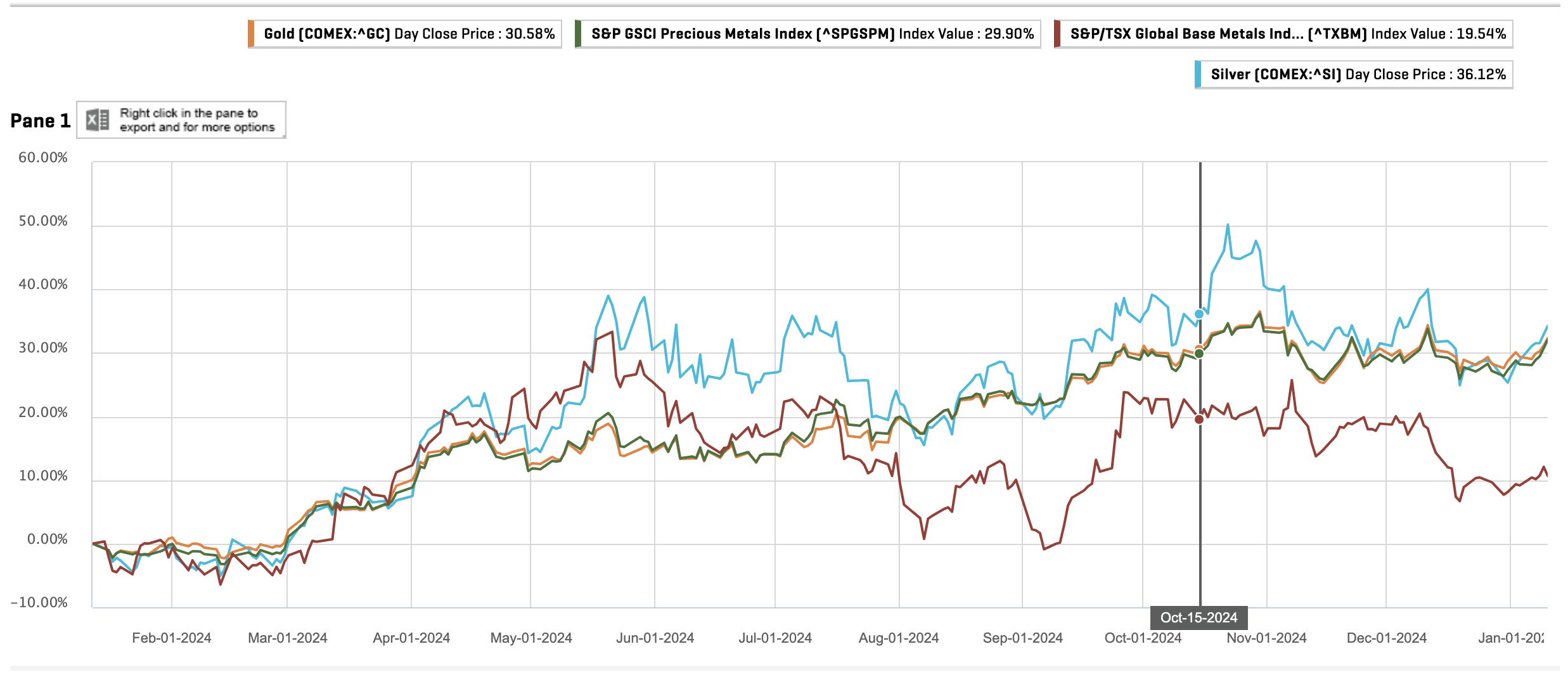
Base metals, on the other hand increased at a slower rate as China, the world’s largest consumer of base metals, experienced slower economic growth in 2024. Weak demand from China’s construction and manufacturing sectors significantly impacted prices for metals like copper, aluminum, and zinc.
Globally, industrial production slowed as central banks raised interest rates to combat inflation. This reduced demand for base metals used in construction, infrastructure, and manufacturing.
Gold Mining Revenue and EBITDA Multiples
Gold maintained its status as a safe-haven asset amid rising inflation concerns and geopolitical tensions.Investor interest remained strong, with gold prices reaching all-time highs.
However, the relationship between gold and interest rates added complexity to investment flows. While some analysts adjusted their bullish gold price targets, the overall outlook for gold remained positive.
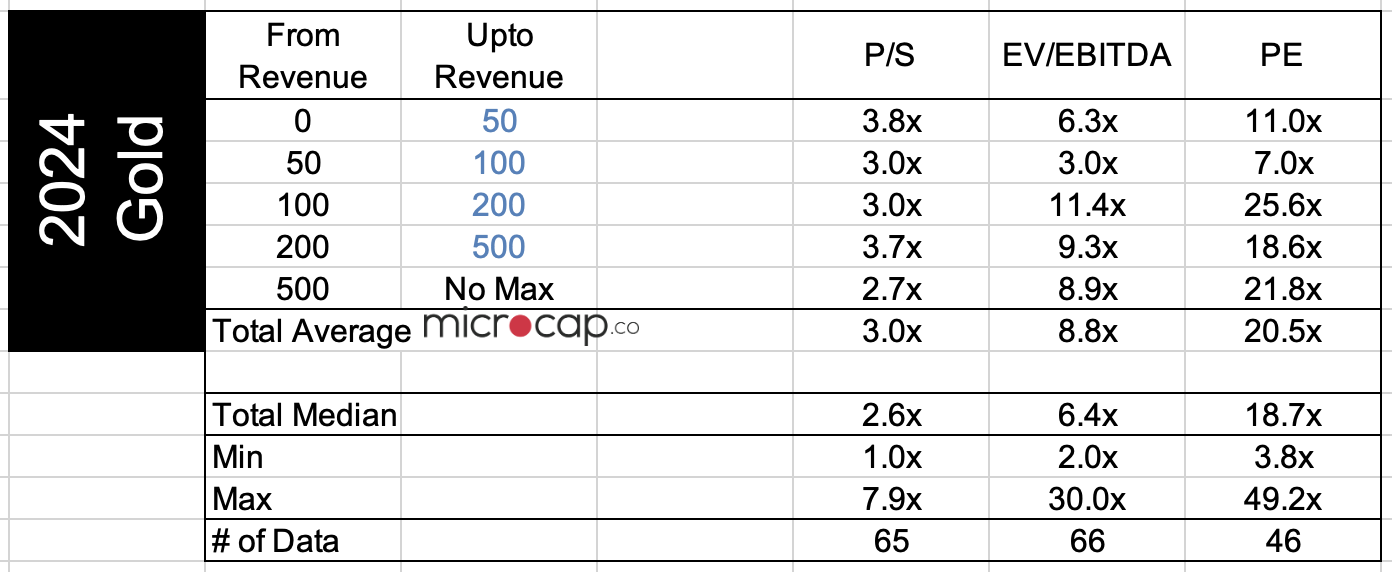
Median revenue multiple for gold mining companies in 2024 is 2.6x. The median EBITDA multiple is 6.4x. The median PE ratio is 18.7x.
Silver Mining Revenue and EBITDA Multiples
Silver saw significant gains, with prices rising to their highest levels since 2013.
Despite this, the gold-to-silver ratio remained above historical averages, indicating silver’s relative undervaluation.
The projected supply deficit and industrial demand contributed to silver’s performance.

Base Metal Mining Revenue and EBITDA Multiples
The base metals sector faced challenges due to slowing economic growth, particularly in China, and falling commodity prices.
Major diversified miners struggled with valuation gaps as they shifted focus to copper, driven by demand from the electric vehicle sector and new technologies.
Investors prioritized short-term returns, complicating acquisition strategies for pure-play copper companies.
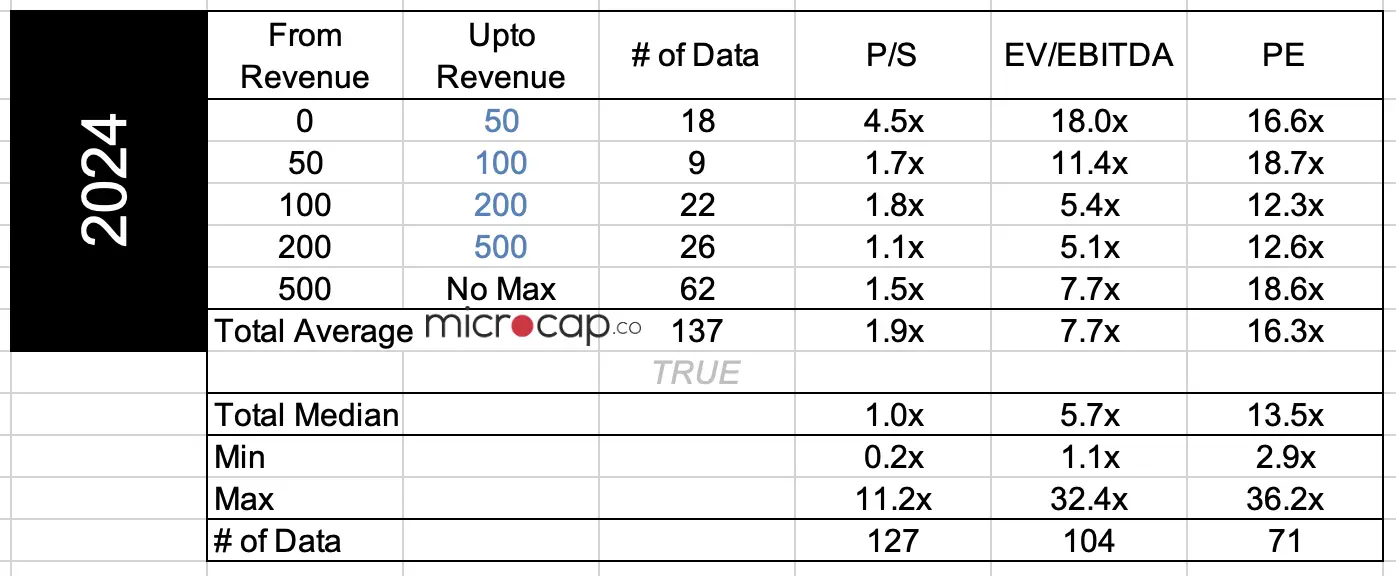
The median base metals companies revenue multiple is 1.0x, much lower than gold and silver mining companies. EBITDA multiple is 5.7x. PE ratio is 13.5x.
Mining Valuation Outlook for 2025
Analysts anticipate that gold will continue to serve as a hedge against inflation and economic uncertainty. Factors such as central bank policies, geopolitical tensions, and industrial demand are expected to influence gold and silver prices. The projected supply deficit in silver may persist, potentially impacting its valuation.
The outlook for base metals is mixed, with some analysts predicting a reversal in strong commodity performance due to increased energy supply and slowing Chinese economic activity. However, the ongoing demand for critical minerals in technology and renewable energy sectors may provide support for certain base metals.
Download Data Set
To download the ~200 companies data set in this analysis, enter your email address below to sign-up for the mailing list and the data set will be sent to your email directly. In some cases, it takes a few hours or a day to receive the email with the data set.
