
In 2024, the global and U.S. retail store industry faced a mix of opportunities and challenges.
Some retailers, such as Costco, achieved significant growth during the holiday season, with sales rising by 9.9% in December and same-store sales up 7.4%. This strong performance drove higher investor confidence and lifted Costco’s valuation.
However, other retailers struggled to adapt to the continued shift towards e-commerce, as well as increased economic pressures.
Dobbies Garden Centre, for example, announced closures of multiple locations as part of a restructuring effort, highlighting the ongoing difficulties faced by traditional brick-and-mortar stores in maintaining profitability and consumer engagement.
This analysis breaks out the segment into grocery stores, department stores, and discount stores.
Retail Store Valuation Multiples
An analysis of 57 public retail store companies, including department stores, grocery stores, and discount stores, revealed that the median retail company valuation multiples are as follows: the revenue multiple in 2024 was 0.5x, the EBITDA multiple was 6.3x, the P/E multiple was 17.1x, and the P/BV multiple was 2.7x.
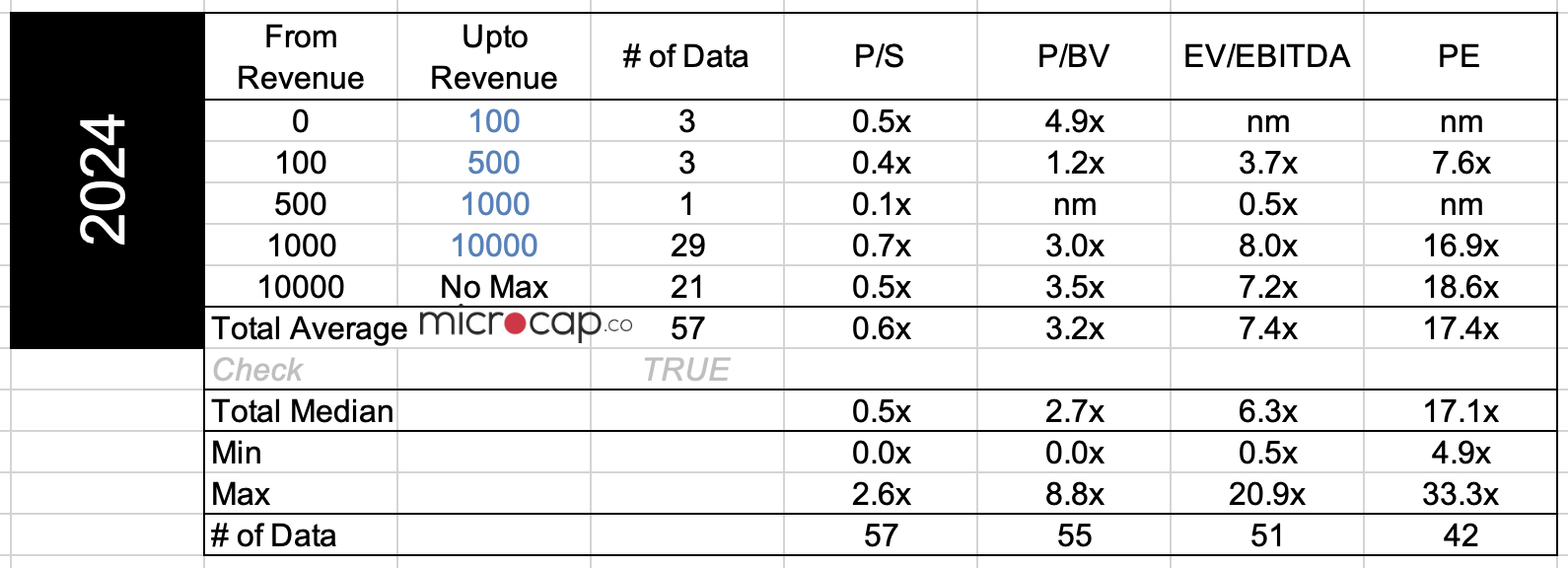
These figures suggest that retail store valuations remain relatively modest compared to other industries, reflecting investor caution amid macroeconomic uncertainty.
The book value multiple of 2.7x indicates that retail store stocks are priced at nearly three times their net assets. This metric is significant for retail stores because tangible assets, such as inventory and real estate, are critical to their operations.
A higher P/BV multiple suggests that investors value these companies’ potential to generate returns on their physical and financial resources.
The multiples align with the capital-intensive nature of the retail industry, which requires substantial investment in inventory and property, and the competitive dynamics that often compress profit margins.
Segment-Specific Valuation Multiples
The analysis also examined specific retail segments.
Grocery Store Valuation Multiples
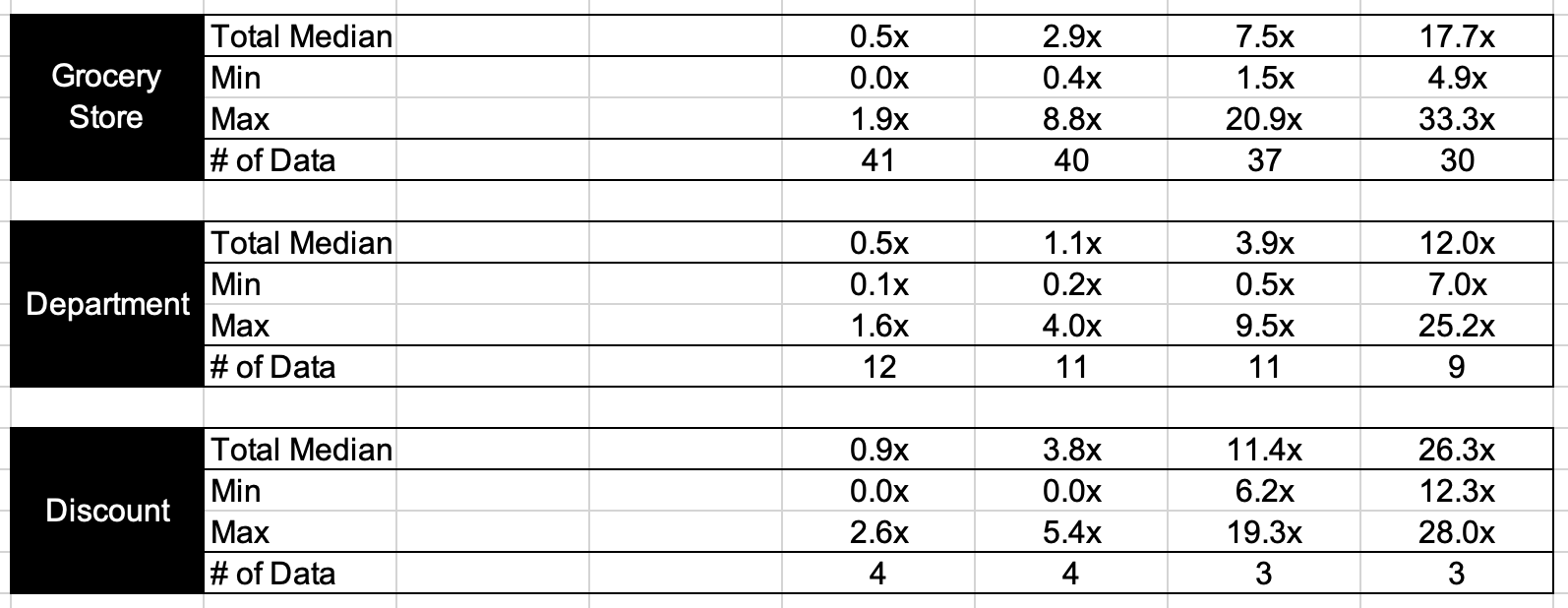
Grocery stores showed a revenue multiple of 0.5x, a P/BV multiple of 2.9x, an EBITDA multiple of 7.5x, and a P/E multiple of 17.7x. These figures reflect the essential nature of grocery retailing, which benefits from consistent demand but faces thin margins due to high operational costs.
Department Store Valuation Multiples
Department stores had lower valuation multiples, with a revenue multiple of 0.5x, a P/BV multiple of 1.1x, an EBITDA multiple of 3.9x, and a P/E multiple of 12.0x, indicating the sector’s struggle to adapt to changing consumer preferences and the e-commerce shift.
Discount Store Valuation Multiples
Discount stores had higher multiples, with a revenue multiple of 0.9x, a P/BV multiple of 3.8x, an EBITDA multiple of 11.4x, and a P/E multiple of 26.3x, reflecting their ability to attract cost-conscious shoppers during economic uncertainty and their efficient business models.
Retail Store Margins
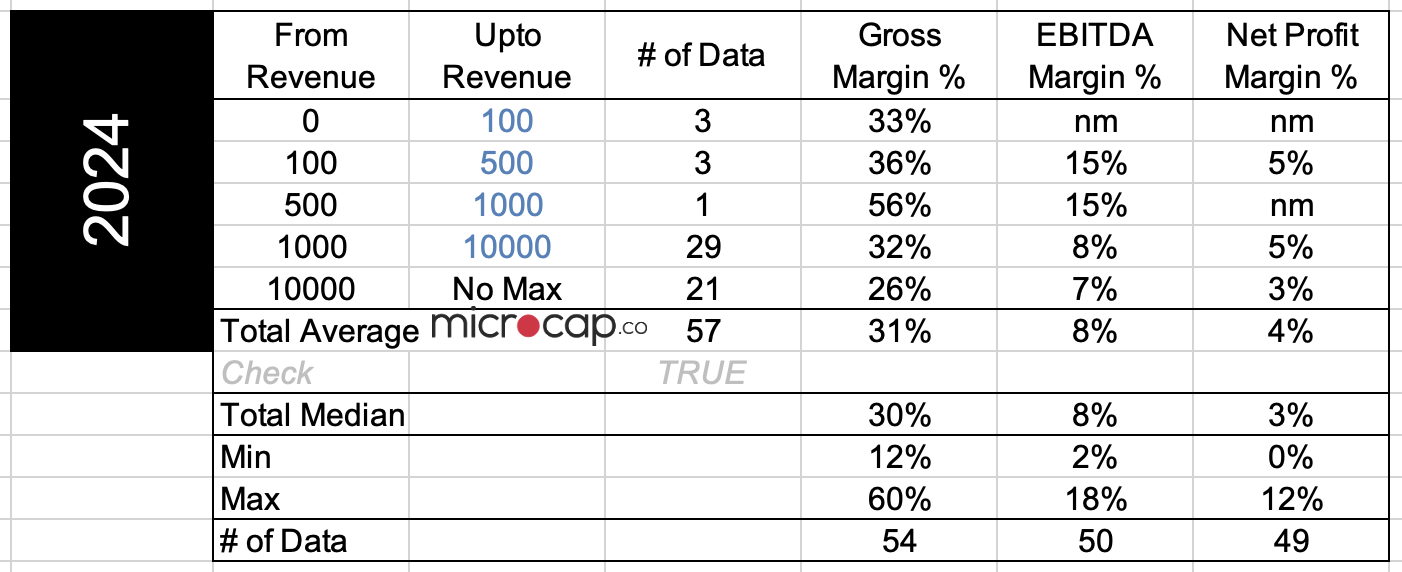
In 2024, retail stores reported a gross margin of 30%, an EBITDA margin of 8%, and a net profit margin of 3%. These margins reflect the industry’s ongoing battle with cost pressures, including labor and logistics expenses.
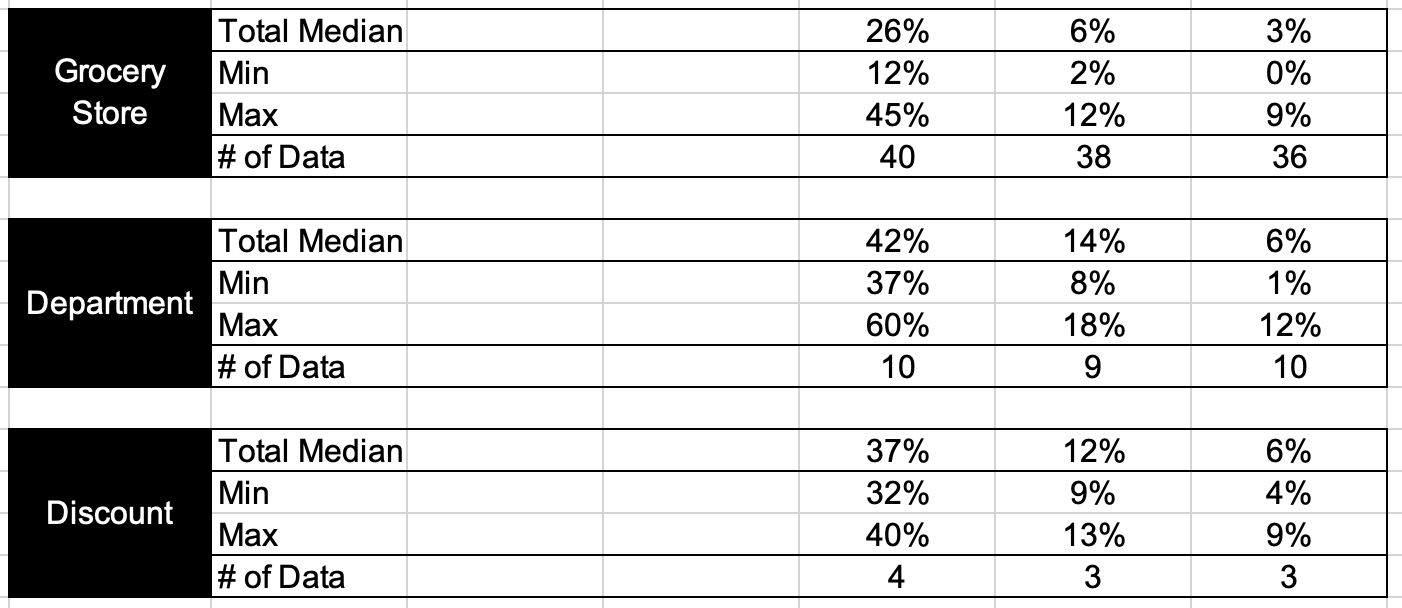
Grocery stores reported a gross margin of 26%, an EBITDA margin of 6%, and a net profit margin of 3%, highlighting the high-cost nature of food retailing.
Department stores, with a gross margin of 42%, an EBITDA margin of 14%, and a net profit margin of 6%, benefited from premium pricing strategies but faced challenges in maintaining consistent foot traffic.
Discount stores demonstrated a gross margin of 37%, an EBITDA margin of 12%, and a net profit margin of 6%, showcasing their ability to balance competitive pricing with operational efficiency.
Retail Stores Outlook for 2025
In 2025, the retail industry is expected to focus on enhancing digital capabilities, improving in-store experiences, and leveraging data analytics for personalized customer engagement.
The global retail market is projected to grow, but challenges such as economic uncertainty and competition from e-commerce will persist.
Retailers that prioritize sustainability, optimize supply chains, and adopt artificial intelligence for operational improvements are likely to attract higher valuations and maintain competitiveness.
Download Data Set
To download the 57 companies data set in this analysis, enter your email address below to sign-up for the mailing list and the data set will be sent to your email directly. In some cases, it takes a few hours or a day to receive the email with the data set.
