
In 2024, the food industry was influenced by consumers becoming more price-sensitive due to economic uncertainty, leading them to choose less expensive products. This shift affected the revenue of many food companies.
Additionally, proposed tariffs on imported goods, such as those from China, threatened to increase costs for everyday grocery items, including seafood and apple juice.
These factors contributed to fluctuations in company valuations throughout the year.
Food Company Valuation Multiples
An analysis of 210 public food companies trading on U.S. exchanges, including agriculture products like fruits and vegetables and packaged food companies, revealed the following median food company valuation multiples for 2024: revenue multiple of 0.9x, EBITDA multiple of 7.5x, and P/E multiple of 17.1x.
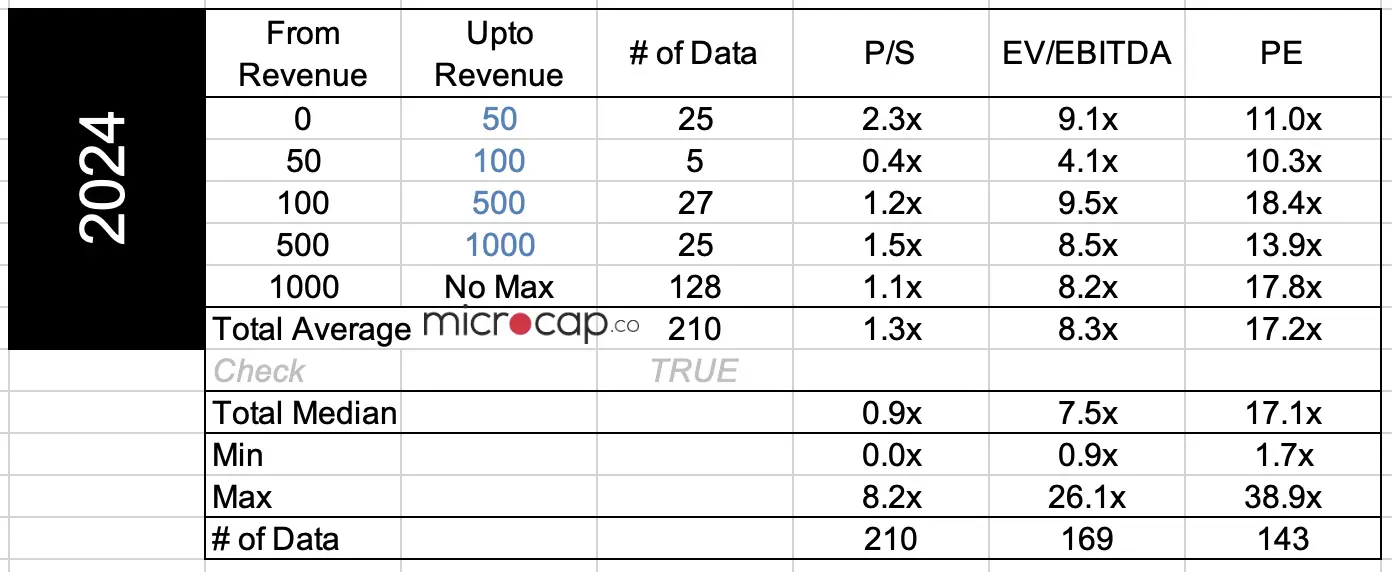
These multiples are relatively moderate compared to other industries. For instance, the average EBITDA multiple across various sectors can vary significantly, with some industries experiencing higher multiples due to different growth prospects and risk profiles.
The food industry’s consistent demand and essential nature contribute to stable, yet modest, profitability, which is reflected in these valuation multiples.
Comparing these figures to 2023, where the median revenue multiple was 0.7x, EBITDA multiple was 11.7x, and P/E multiple was 21.2x, we observe a slight increase in the revenue multiple but a decrease in EBITDA and P/E multiples.
This change suggests that while companies may have increased their revenues, their operating efficiencies and net earnings faced pressures, possibly due to rising costs and competitive pricing strategies.
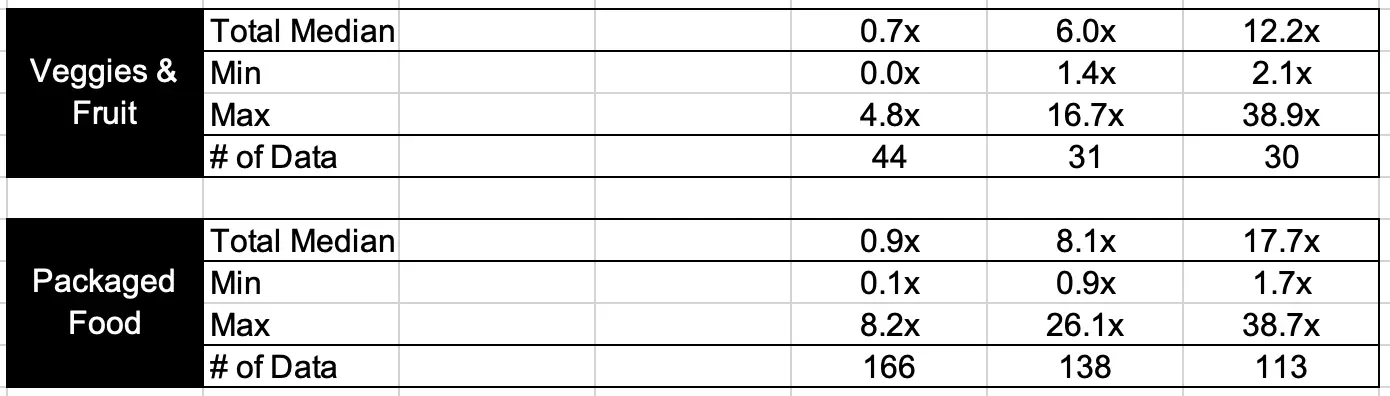
Agricultural companies with shorter shelf life had lower valuation multiples than packaged goods that can scale their operations.
Food Industry Margins
In 2024, the gross margin for food companies was 28%, EBITDA margin was 12%, and net profit margin was 5%. These margins are considered average within the industry, indicating that while companies manage to maintain a reasonable cost structure, they face challenges in significantly boosting profitability.
Factors such as increased raw material costs and shifts in consumer preferences towards private-label brands have impacted these margins.
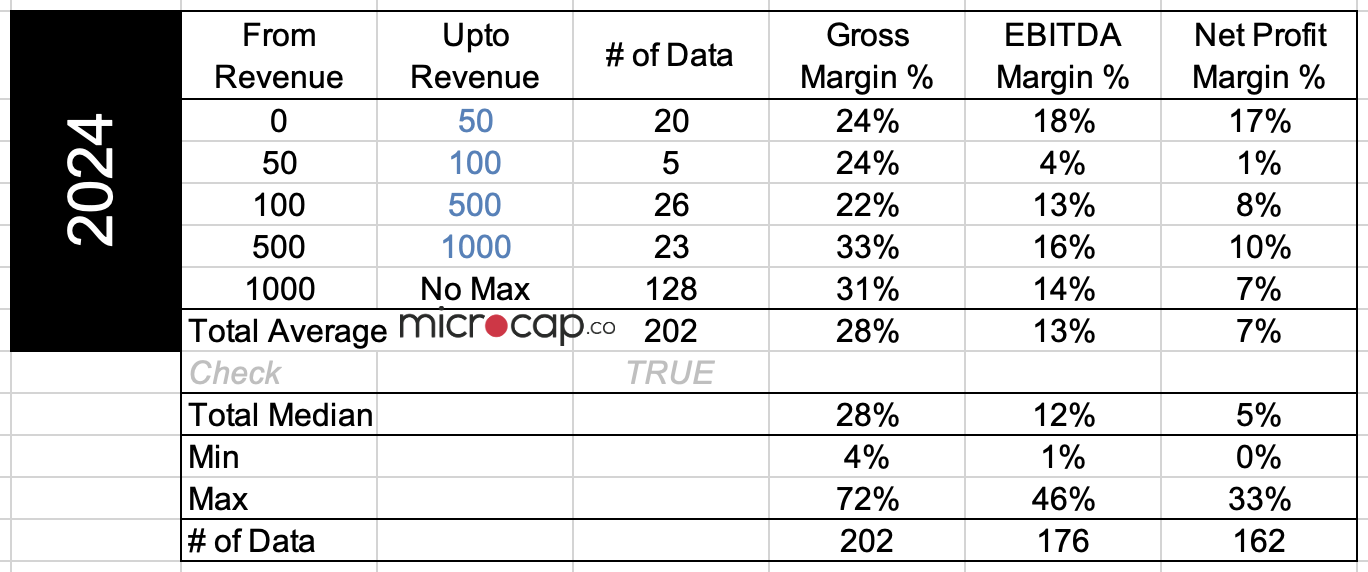
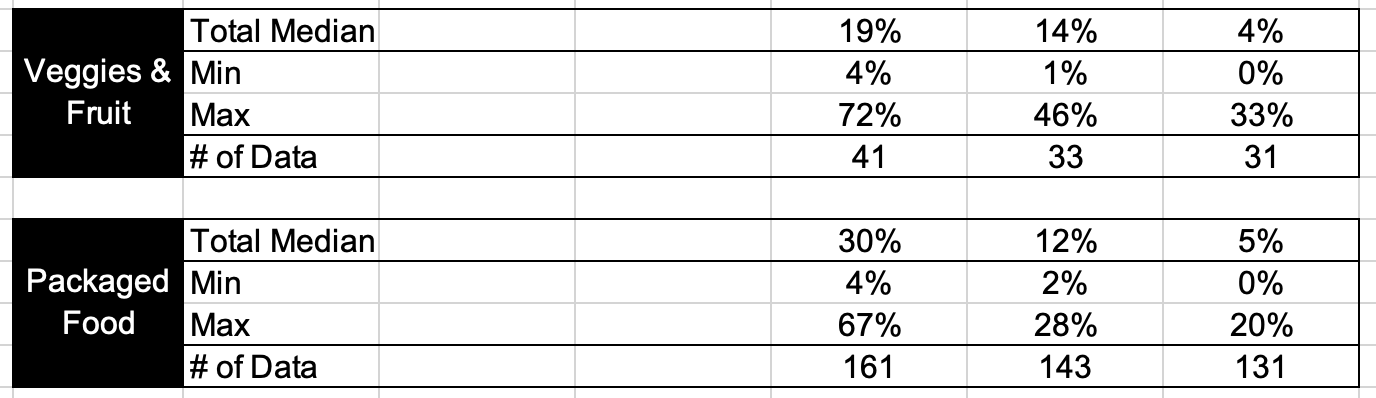
Packaged food companies had higher gross margin and net profit margin than agricultural companies.
Food Industry Outlook 2025
Looking ahead to 2025, the food industry is expected to experience modest volume growth after three consecutive years of decline. Beverage and deli categories are anticipated to outperform other segments in unit sales.
However, potential policy changes, including tariffs and reductions in agricultural subsidies, could lead to higher food prices.
Download Data Set
To download the 210 companies data set in this analysis, enter your email address below to sign-up for the mailing list and the data set will be sent to your email directly. In some cases, it takes a few hours or a day to receive the email with the data set.
