
In 2024, bank valuations faced mixed trends as with the financial services industry. Let’s look at regional banks and diversified banks separately.
Regional banks are smaller institutions focused on specific areas or communities. They rely heavily on deposits and loans from local customers.
Diversified banks, on the other hand, are large global institutions. They offer a wide range of services, from consumer banking to investment banking and wealth management. These banks have international operations and more diverse revenue streams.
In 2024, regional banks faced challenges. Rising interest rates helped boost net interest margins, but higher loan defaults added pressure. Increased regulatory scrutiny also raised operational costs.
Diversified banks remained more stable. Their diversified revenue helped offset risks. However, competition from fintech and global market volatility kept valuations in check.
Bank Valuation Multiples
The 2024 analysis includes all the publicly traded banks listed on major US exchanges.
Compared to 2023 valuation multiples, both sets of regional and diversified banks experienced increased valuation multiples.
Bank Revenue Multiples, P/BV Multiples
The 2023 revenue multiple for banks was 2.6x. In comparison, the 2024 diversified bank revenue multiple is 2.8x and for regional banks it is 3.2x.
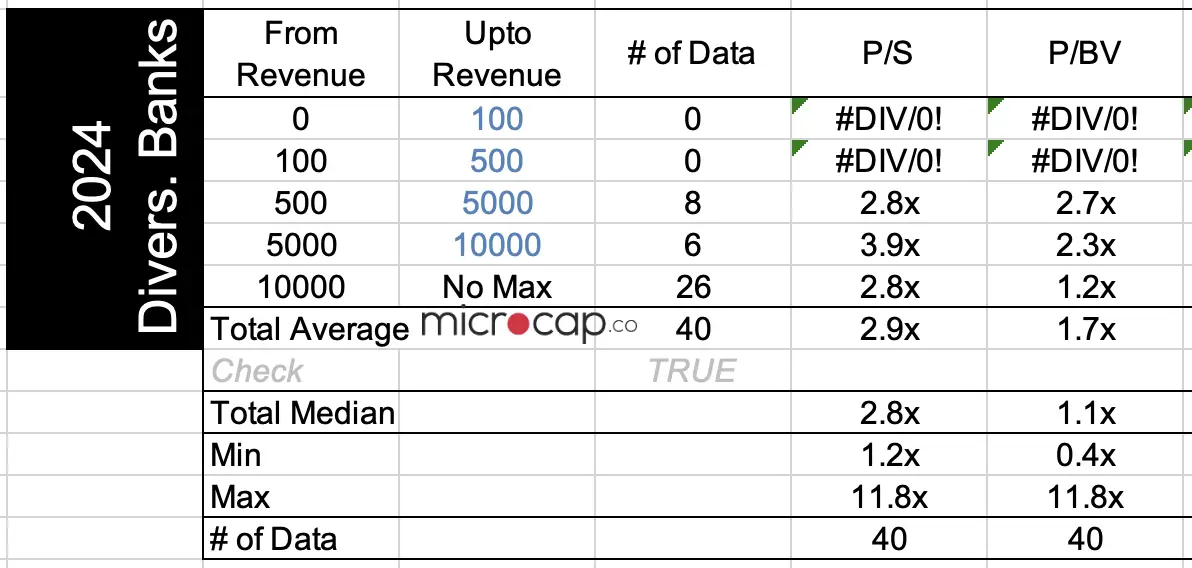
Note that all the diversified banks had revenue $500 million, and most had over $10 billion.
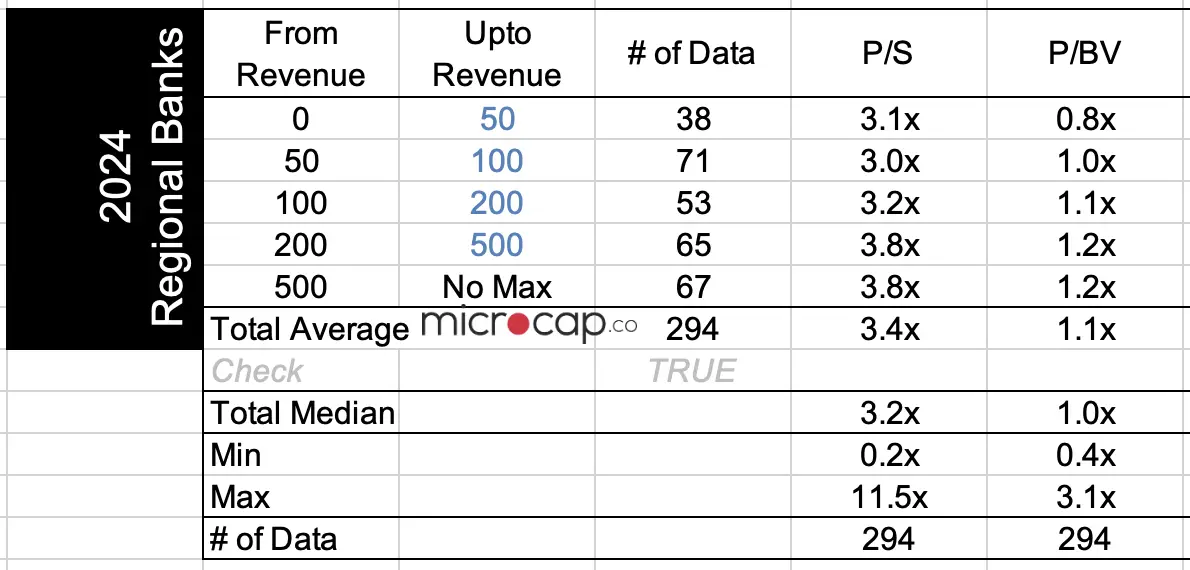
Regional banks had higher revenue multiple than diversified banks due to several factors:
- Regional banks focus mainly on lending and deposits. In 2024, interest rates remained elevated as central banks continued efforts to combat inflation. This benefited regional banks with higher interest rates improving their net interest margins for lending and deposits. Regional banks, with simpler business models, were also less affected by slower global economic growth and market volatility.
- On the other hand, diversified banks’ revenue comes from multiple streams, including investment banking, trading, and international markets, which may have lower growth rates or higher volatility. Diversified banks had greater exposure to international markets, some of which experienced slower economic recovery or instability. These factors may have dragged on revenue growth for diversified banks.
P/Book value multiples remained similar for diversified and regional banks at ~1x. At a one to one ratio, the market values the banks’ assets fairly and doesn’t have expectations of unwarranted growth looking forward a year.
Bank EBITDA Multiples
Note that EBITDA data was not available so, net operating income was used. Enterprise value was also not available, so market can was used in place.
In 2023, the median EBITDA multiple was 7.2x. In 2024, the median EBITDA multiple for diversified banks is 8.4x and for regional banks is 9.0x.
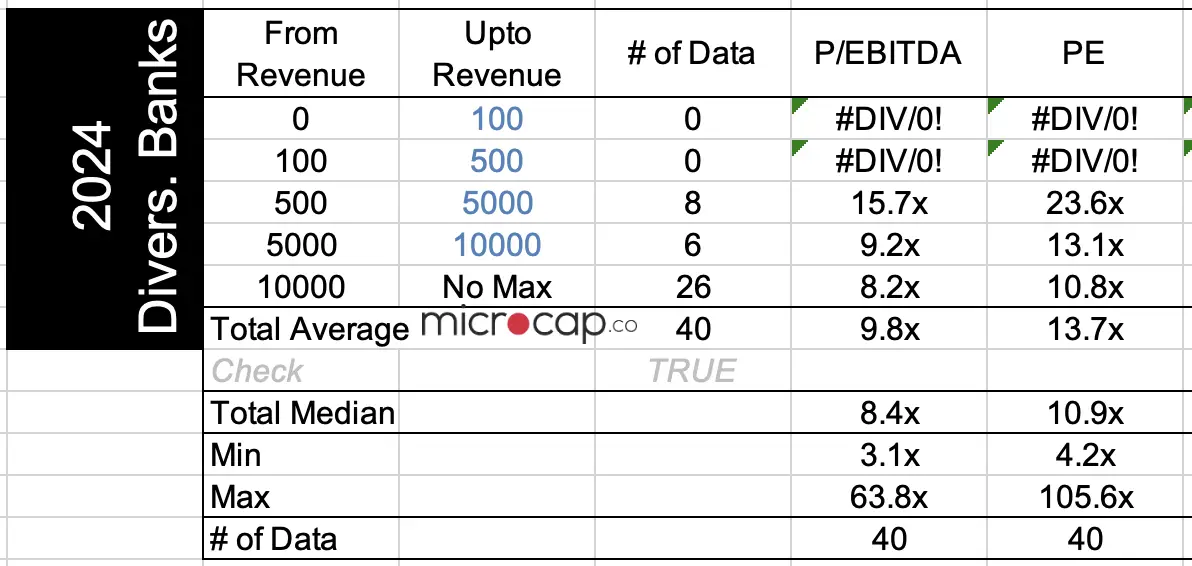
Higher EBITDA multiple in 2024 indicates that the market is putting higher value on the profitability of the banks. With higher interest rates and thus higher net interest margins, regional banks had slightly higher EBITDA multiples.
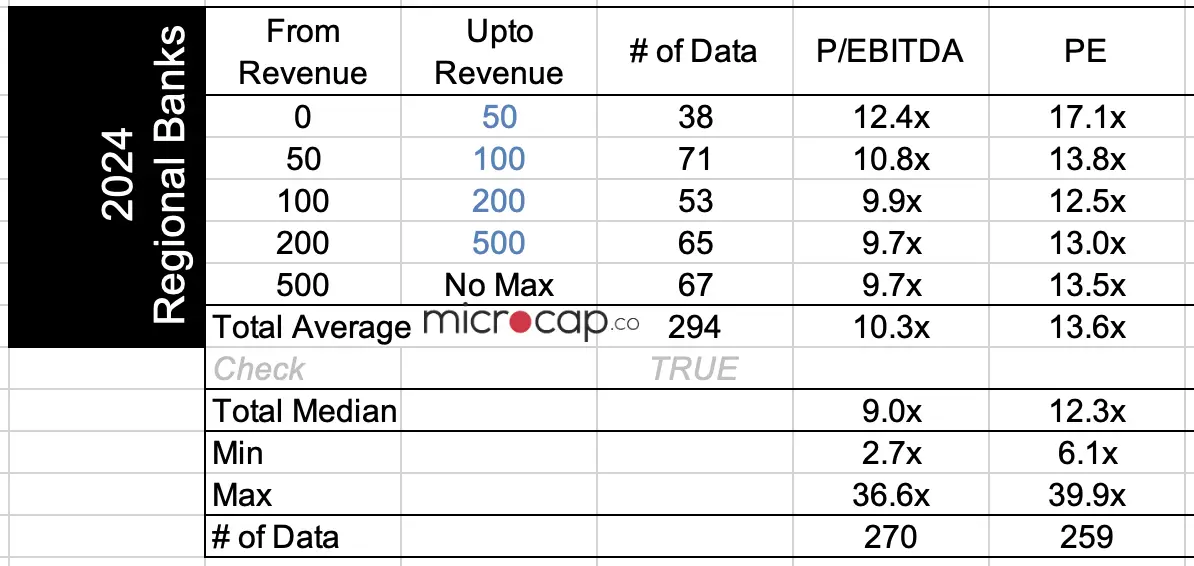
Going forward, we should the market to reward banks that can demonstrate robust profitability and punish those that have deteriorating profitability.
Bank Dividend Yields
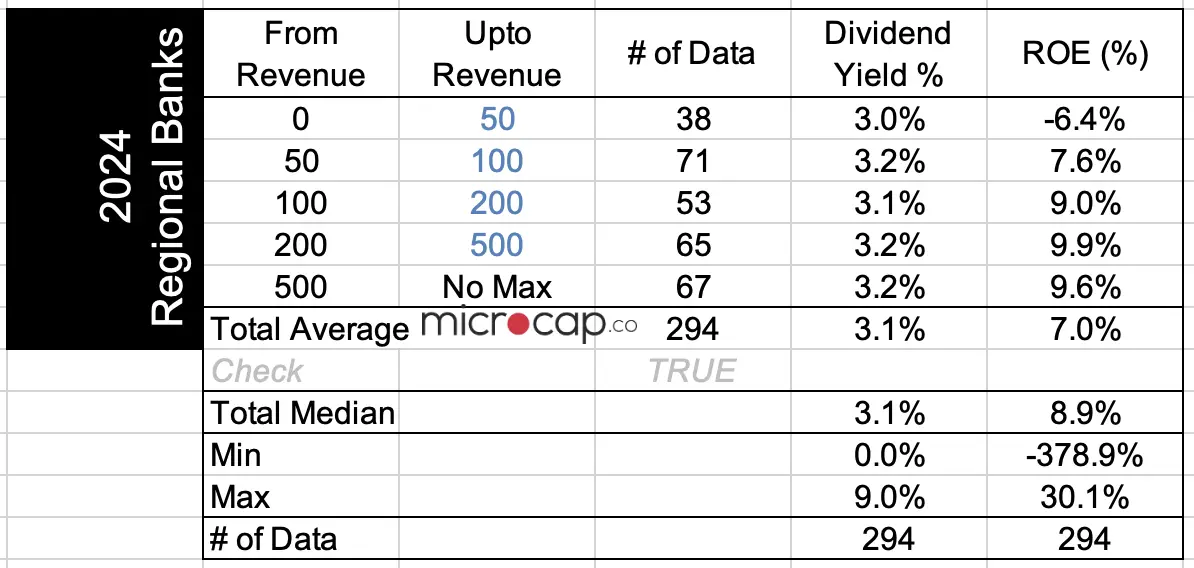
Diversified banks can be stable investments as they have diversified revenue streams to mitigate concentrating risk in a few areas. Diversified banks also provide a steady dividend yield.
In 2024, the median dividend yield was 4.4%.
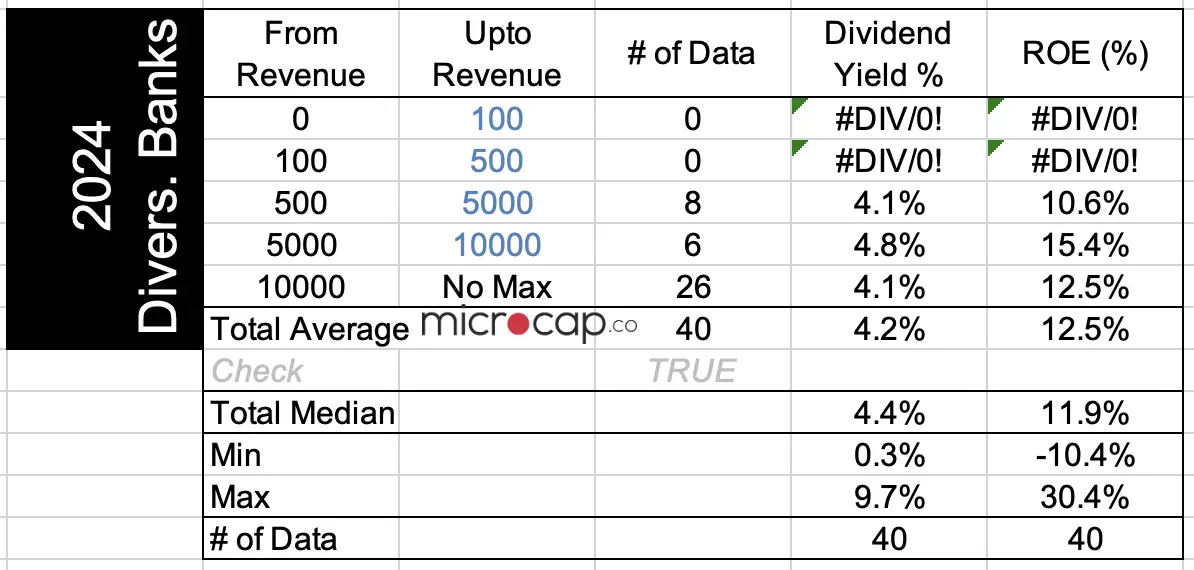
Regional banks have lower dividend yield as regional banks are smaller in scale so they are more growth-oriented and focus on reinvesting profits to support their growth and operations. This reduces the cash available to pay out as dividends to shareholders.
In addition, regional banks may face stricter capital requirements relative to their size, leading them to maintain higher retained earnings for regulatory compliance and as a buffer against economic uncertainty.
Bank Margins
In 2023, the median operating income margin for banks was 38% and the median net profit margin was 29%.
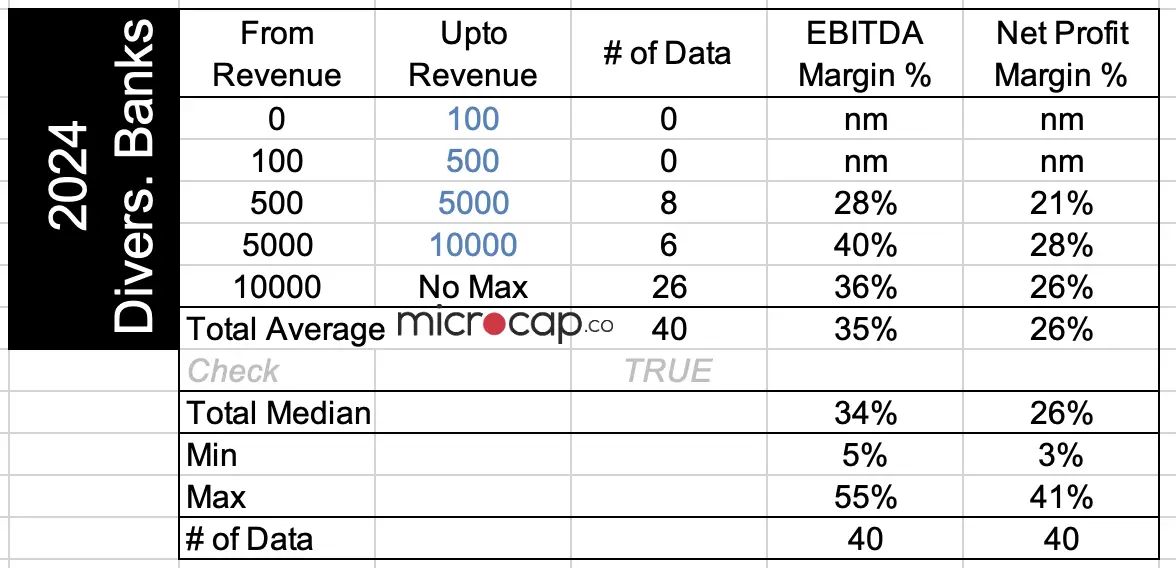
Comparatively, diversified banks had a median operating income margin of 34% and net profit margin of 26% in 2024.
Regional banks had similar operating income margin as diversified banks with median operating income margin of 35% and net profit margin of 24%.
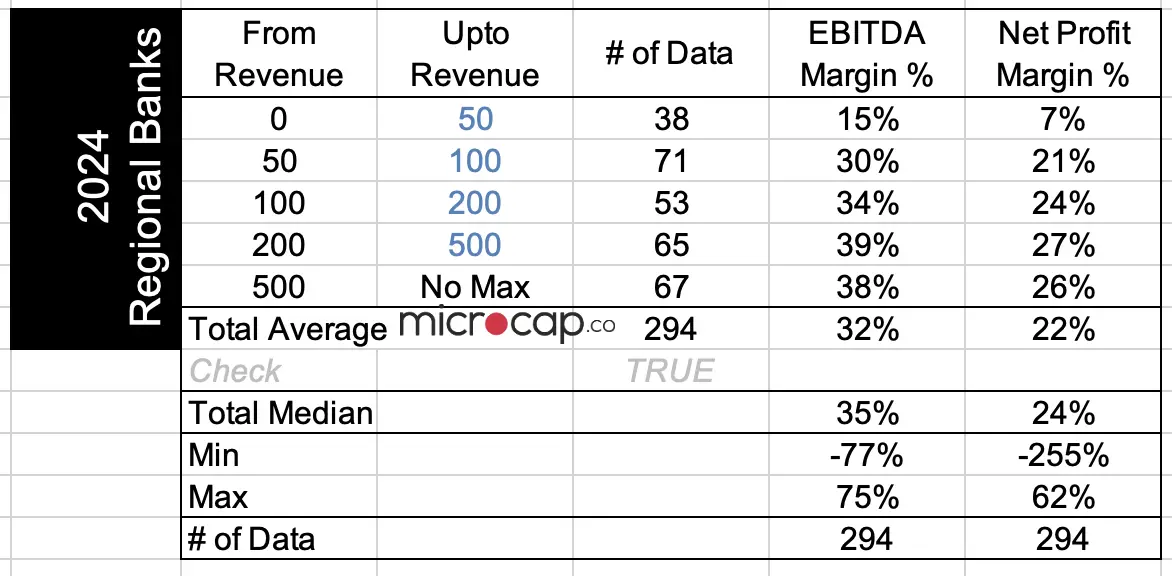
Banks had rising operating costs and thus lower profitability in 2024. However, investors have more faith in the long term growth and profitability of banks with better economic outlook going forward, which explains higher multiples in 2024 compared to 2023.
Bank Valuations Looking Forward 2025
In 2025, the valuation landscape for banks could shift further. If interest rates stabilize, net interest margins may level off, impacting growth.
Fintech competition will likely intensify, pushing banks to innovate.
Regulatory scrutiny may increase, especially for mid-sized banks. Banks with strong digital strategies and diverse revenue streams may gain higher valuation multiples.
Investors will likely favor banks that demonstrate resilience to economic uncertainties and adapt to shifting consumer behaviors.
Useful Links: How To Use Valuation Multiples
For those who are not familiar with using valuation multiples to value companies, see posts I wrote below as helpful guides:
- How to value a company based on revenue
- How to value a company based on EBITDA
- How to value a company based on earnings
- How to find your own valuation multiples
- Other posts on how to value a company
Download Data Set
To download the ~350 companies data set in this analysis, enter your email address below to sign-up for the mailing list and the data set will be sent to your email directly. In some cases, it takes a few hours or a day to receive the email with the data set.
